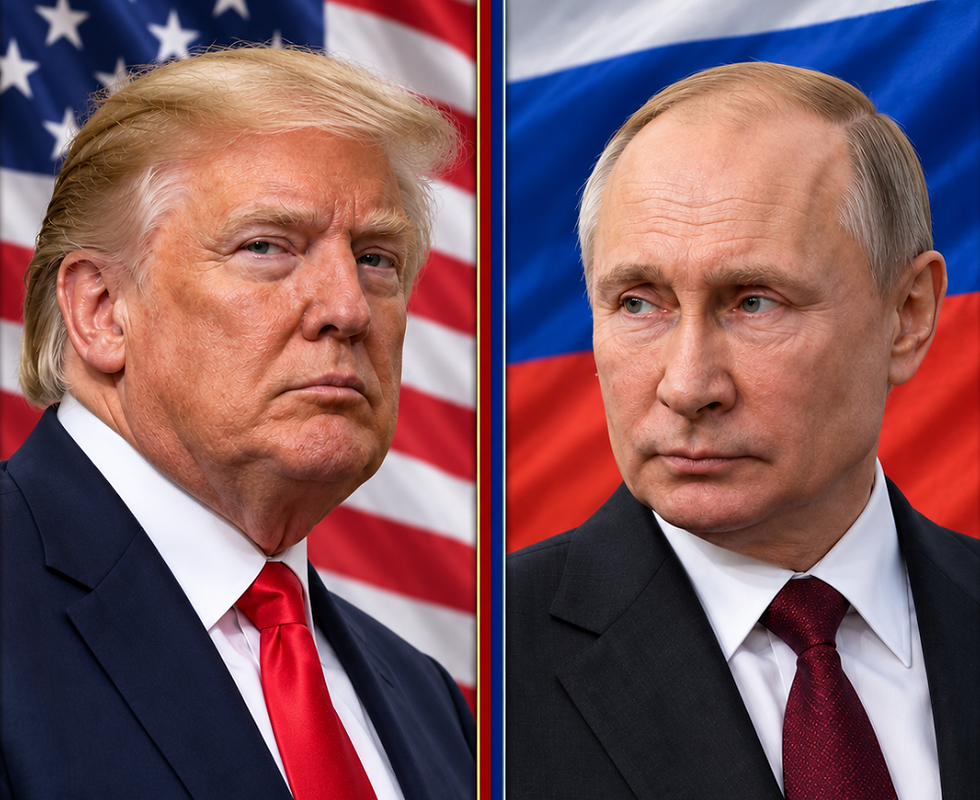
U.S.- Israel - Sunni Nations Coordinated Strategy Clearly Defined: Blockade + Decapitation Strikes

Core Assessment
Since April 13, 2026, the United States has imposed a naval blockade on Iranian ports and related sea lanes, while Israel has simultaneously intensified precision “decapitation” operations targeting hardline leaders of Iran’s Islamic Revolutionary Guard Corps (IRGC). Together, they form a composite pressure strategy of “economic strangulation + targeted elimination.”
This combination remains one of the Trump administration’s lowest-cost, highest short-term pressure options. In the long run, the U.S., as a net petroleum exporter with substantial strategic petroleum reserves and potential fiscal tools (such as punitive measures on high oil price-related transactions), possesses stronger staying power than widely expected. Fluctuations in global oil prices have relatively limited actual impact on the U.S. economy, while hitting major oil-importing countries such as China, India, Japan, and South Korea far harder. These nations are highly likely to take the lead in pushing for escort operations or diplomatic solutions, objectively strengthening the U.S.-Israel - Sunni Nations strategic initiative.
Iran is not without leverage — years of sanctions have honed its sanctions-evasion expertise, the Strait of Hormuz provides geographic leverage, the shadow fleet and tacit support from countries like China offer some backing, and the regime’s “survival-first” resilience gives it room to endure. However, these advantages are being rapidly eroded by the blockade and decapitation campaign. The key variables are the rationality of Iranian decision-making and whether its internal power structure can withstand sustained pressure.
I. Current Situation (as of April 22, 2026)
● United States: The naval blockade began on April 13, focusing on vessels entering or leaving Iranian ports. On April 19, the U.S. Navy guided-missile destroyer USS Spruance intercepted the Iranian-flagged cargo ship MV Touska in the northern Arabian Sea as it attempted to reach Bandar Abbas. After repeated warnings over approximately six hours went unheeded, the Spruance fired several 5-inch gun rounds into the ship’s engine room, disabling its propulsion. U.S. Marines then fast-roped from helicopters to board and secure the vessel, which has been seized and searched. This marks the first substantive enforcement action since the blockade took effect; the U.S. has already turned back or intercepted multiple vessels. President Trump stated clearly that the blockade will continue until an agreement is reached.
● Iran: Iran has attempted to counter by controlling the Strait of Hormuz and issuing warning shots at some vessels, but it has largely shifted from offensive to defensive posture. The second round of U.S.-Iran talks mediated by Pakistan is in preparation or underway, making the ceasefire and agreement window highly sensitive.
● Israel: Israel continues precision strikes against senior IRGC and Quds Force commanders, including intelligence chief Maj. Gen. Seyed Majid Khademi (killed on April 6 in a joint U.S.-Israel operation, as confirmed by Iranian officials). This series of actions has further degraded Iran’s command chain, while Sunni Intelligence is exposing China’s past and present involvement with Iran.
The U.S.- Israel - Sunni Nations coordination creates a pincer effect, simultaneously pressuring Iran’s economic lifelines and command structure. Market reactions have shifted from initial emotion-driven panic to more rational analysis: the petroleum demand gap has not reached worst-case levels, and oil prices contain a degree of speculative premium.
II. U.S. Strategy: From Chaos to Clarity — Blockade + Decapitation
Dimension
U.S. (Naval Blockade)
Israel (Decapitation Strikes)
Synergistic Effect
Economic
Cuts off most of Iran’s maritime trade (sea transport accounts for over 90% of its trade), targets IRGC smuggling and financial networks
Strikes IRGC gray income channels
Blocks major gray channels, accelerates forex depletion
Military
Navy controls key sea lanes
Eliminates senior commanders, paralyzes decision-making and coordination
Dual erosion of Iran’s counterattack capability and will
Political
Open pressure, ample negotiation leverage
Creates fear while maintaining flexibility alongside Sunni Nations Intelligence
Forces Iran into a “concede or endure sustained collapse” dilemma
The core lies in the U.S. generating maximum pressure at relatively low direct military cost while retaining multiple fallback options (e.g., lifting the blockade or restraining Israel in exchange for substantive Iranian concessions on its nuclear program and control of the Strait).
III. Impact on the U.S.- Israel - Sunni Nations: Short-Term Efficiency, Long-Term Resilience Stronger Than Expected
Advantages and Long-Term Capabilities:
● Economic impact is relatively controllable: As a net oil exporter, the U.S. actually benefits its domestic shale producers from higher oil prices. Strategic Petroleum Reserves (SPR) are sufficient to buffer short-term volatility.
● Potential fiscal tools: The Trump administration can impose punitive measures on high oil price-related transactions to protect domestic energy industries, stabilize gasoline prices, and further cut off Iran’s gray income.
● Pressure effects are already visible: The blockade and strikes have sharply reduced Iranian oil exports and damaged the IRGC command chain; Iran may be forced back to the negotiating table within weeks.
● Israel maintains strategic initiative: Fighting is outsourced, consistent with its “battle outside borders” principle.
Risks exist but remain relatively manageable. Global oil price fluctuations are borne mainly by import-dependent countries, and the cost of escalation falls primarily on Iran. Compared to a ground invasion, this “combination punch” still offers high cost-effectiveness.
Summary: In the short term, it is an efficient lever; in the long term, America’s staying power — rooted in its net exporter status and economic resilience — has been significantly underestimated.
IV. Sources of Iran’s Resilience: Leverage and Tenacity Should Not Be Underestimated
Despite facing compound pressure, Iran retains certain strengths:
● Strait of Hormuz Leverage: Its geographic position grants asymmetric threat capabilities. Even under U.S. blockade, Iran can selectively disrupt approximately 20% of global oil shipments using low-cost means such as missiles, drones, mines, and small boats. This can drive up oil prices, raise costs for U.S. allies, and signal “cooperative passage” to countries like China, Russia, and India. However, the associated risks have largely shifted to oil-importing nations.
● Shadow Fleet and Sanctions Evasion: The long-established network (ship-to-ship transfers, AIS spoofing, third-party ports, etc.) continues to function. China remains its largest buyer (80-90% of exports, often settled in RMB). While new exports have plummeted under the blockade, existing floating storage, overland routes, and Caspian Sea corridors provide partial buffers — though efficiency and costs are increasingly challenged by intensified naval enforcement.
● Proxy Network: Groups such as the Houthis, Hezbollah, and Iraqi militias in the “Axis of Resistance,” though affected by decapitation strikes, can still divert attention and create multi-front attrition.
● Internal Resilience: The economy has adapted to a “sanctions survival mode,” with improved domestic refining capacity, higher self-sufficiency in some areas, and strong nationalist mobilization. The regime views the current conflict as an “existential struggle.”
Summary: These strengths rest on geographic leverage, evasion networks, and a “wait-and-see” strategy, but they are being rapidly eroded by the blockade and decapitation campaign. The buffer period may be measured in weeks or months, not indefinitely.
V. Impact on Iran: Economic Asphyxiation + Command Paralysis, Resilience Rapidly Depleting
● Economic Devastation: Maritime trade largely interrupted, oil exports severely restricted, foreign exchange reserves depleting quickly, the rial hitting new lows, and risks of social unrest rising sharply.
● Military Command Breakdown: IRGC senior leadership continuously eliminated, proxy networks losing coordination, counterattack actions chaotic and ineffective.
● Internal Political Crisis: Divisions between moderates and hardliners intensify; concessions are branded as weakness, while counterattacks lack strength, placing regime stability under severe strain.
Who Benefits Inside Iran — and Why?
From the perspective of national interest, continuing confrontation carries extremely high costs. Yet the crisis paradoxically strengthens the following internal powerful groups:
1. IRGC and Its Affiliated Commercial Networks: Reinforces economic monopoly (control of gray channels) and political influence. The “heroic narrative” consolidates grassroots support; decapitation strikes instead foster internal unity (mid-level cadres quickly fill vacancies, martyr narratives strengthen cohesion).
2. Supreme Leader Khamenei and Conservative Clerical Circles: External enemies serve as an effective tool to maintain theocratic rule, enabling martial law, suppression of dissent, and attribution of economic woes to outsiders. Khamenei can use negotiation dominance to balance factions.
3. “Resistance Economy” Oligarchs Linked to the IRGC: Monopolize overland/black-market smuggling profits and gain de facto protection for import-substitution industries.
Losers: Moderate political forces, private entrepreneurs unaffiliated with the IRGC, and ordinary citizens (facing unemployment, shortages, and deepening poverty, yet lacking organizational capacity).
Summary: Prolonging the crisis is “rational” for internal powerful groups but “irrational” for the nation as a whole. This explains why Iran is unlikely to make rapid, comprehensive concessions — doing so could dismantle its monopoly and ideological legitimacy. Ending the crisis may require visible cracks in the internal power structure (e.g., large-scale public protests or leadership changes).
Iran’s Potential for Internal Uprising
Social anger has reached a high point (protests from late 2025 to early 2026 spread across 31 provinces, involving traditional pillars like bazaar merchants, with slogans shifting from economic demands to political reckoning). However, a “pressure-cooker equilibrium” persists: the repression apparatus remains brutally effective (live fire, internet blackouts, mass arrests), there is no unified leadership, information flow is severed, and security forces have not seen large-scale defections.
Favorable Conditions: Economic collapse (inflation running high, rial repeatedly hitting record lows, rising poverty), cross-class participation in protests.
Obstacles: Dense repression coverage, functioning security institutions, public fear of civil war, and absence of a clear alternative.
Pathways:
● Pathway 1: U.S. - Israel - Sunni Nations continue targeted weakening of the IRGC repression machine (e.g., checkpoints), creating breathing room for protests.
● Pathway 2: Internal fissures widen, with loyalty among rank-and-file soldiers beginning to erode.
Aspect
Current Status
Conclusion
Social Anger
At historic high, cross-class
Fuel is abundant
Organizational Capacity
Fragmented, no leadership, no alternative
Lacks structural triggers
Repression Capacity
Damaged but still effective, no mass defections
Being eroded
External Support
U.S.-Israel indirectly weaken repression
Supportive but not decisive
Information Flow
Severed, preventing nationwide resonance
Severely obstructed
Final Judgment: The possibility of an uprising is higher than at any time in the past two decades, but it is not inevitable. The regime has lost some legitimacy but has not yet lost control. Time is the critical variable — if the blockade and decapitation can force negotiations before the IRGC repression apparatus fully collapses, an uprising may be “frozen”; otherwise, public anger may gradually dissipate over time.
VI. International Reactions and Global Geopolitical Impact: Asian Importers Face Greatest Pressure and Are Likely to Act First
China, India, Japan, and South Korea — major oil-importing countries with high external dependence — are most significantly affected by high oil prices and disrupted sea lanes. They have already begun escort operations, diplomatic protests, or coordination efforts and are most likely to act first (through independent escorts or multilateral mediation), objectively strengthening the U.S.- Israel - Sunni Nations negotiating position. China and Russia, while criticizing U.S. unilateral actions, are inclined toward diplomatic efforts to restore stability driven by practical interests rather than military confrontation. All Arab allies quietly support the pressure but equally desire regional stability.
In general, the party that feels the pain first will act first. Asian countries’ involvement will serve as an “external booster” for the U.S.-Israel strategy rather than an obstacle.
VII. Overall Conclusion and Outlook
The U.S.- Israel - Sunni Nations “blockade + decapitation” coordinated strategy remains highly coercive in the short term. In the long run, America’s economic resilience and multiple fallback options have been underestimated, while Iran’s resilience, though real, is being rapidly depleted. Both sides are betting on who will break first.
● Short Term (1-4 weeks, critical window): Iran is highly likely to be forced back to the negotiating table and accept harsher terms. The second round of Pakistan-mediated talks and related ceasefire windows will determine the breakthrough timing.
● Medium Term (1-3 months): Asian major oil importers, under their own pressure, will accelerate escort and diplomatic solutions, further amplifying the U.S.-Israel leverage.
● Long Term: As long as the conflict does not escalate into a ground war, the U.S. holds more cards. However, if Iran successfully uses the Hormuz lever to prolong the situation, it may force compromises from all parties.
Final Judgment: This is a rational maximum-pressure campaign built on America’s strong economic resilience and multiple options. It takes Iran’s realities into account and does not aim to overthrow the government. At present, the U.S. clearly holds the initiative. The negotiation outcomes in the coming days to weeks will largely determine the direction of this high-stakes game. The situation remains highly fluid; substantive breakthroughs will require external pressure to resonate with cracks in Iran’s internal power structure.