
Iran’s President Attacks America From New York — While America Protects His Right to Speak
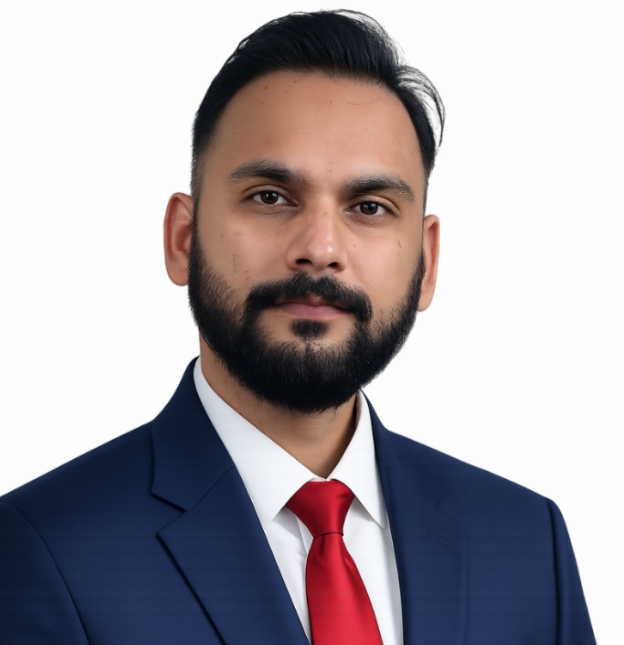
NEW YORK — Iranian President Masoud Pezeshkian stood before the United Nations General Assembly on Wednesday and delivered a forceful defense of Tehran, accusing the United States and Israel of aggression and portraying Iran as a victim rather than an aggressor in the ongoing Middle East conflict.

But there was another story unfolding around his speech — one that said something important about America itself.
Pezeshkian was able to make his case before the world from New York City, on American soil, even as his government remains locked in a bitter confrontation with the United States.
That contrast is worth recognizing.
America does not have to agree with Iran’s message for that message to be heard at the United Nations.
And so, on Wednesday, the president of Iran was given access to one of the most visible diplomatic platforms in the world.
That is the system the United States hosts.
Pezeshkian Presents Iran as the Victim
Pezeshkian used his address to reject the American description of Iran and defend Tehran’s actions during the conflict.
“We have only defended ourselves. We are not terrorists,” Pezeshkian told the General Assembly, according to Associated Press reporting.
He accused the United States and Israel of attacking Iran and displayed photographs that he said showed Iranian civilians, including children, killed during the conflict. Pezeshkian insisted Iran had not surrendered despite American military pressure.
Iran's president also sought to turn the accusations against Washington, arguing that Iranian civilians had themselves become victims of terrorism and military aggression.
It was Tehran’s version of events, presented directly to an international audience.
The United States strongly disputes that broader narrative.
President Donald Trump, addressing the same General Assembly one day earlier, defended the American campaign against Iran and argued that Tehran had repeatedly obstructed diplomacy. At the same time, Trump indicated that Washington remained open to an agreement capable of bringing the conflict to an end.
The two speeches illustrated how dramatically different the American and Iranian accounts of the war have become.
The Difference Is Bigger Than One Speech
Yet Pezeshkian’s presence in New York also highlighted a deeper difference between the political systems confronting one another.
The United States allowed the international diplomatic process headquartered on its territory to proceed even when the speaker represented a government openly hostile to Washington.
That does not mean Washington endorsed Pezeshkian’s arguments.
It means he was able to make them.
American freedom has never depended upon everyone saying things Americans like.
Indeed, one of the defining principles of an open society is that its institutions can tolerate criticism — even harsh criticism — without requiring the critic to praise the country providing the platform.
There is an important legal qualification: because the United Nations headquarters is located in New York, U.S. access obligations arise from international agreements governing the UN. The Iranian president's appearance therefore should not be characterized simply as a discretionary favor from Washington.
But the broader contrast remains striking.
An adversarial foreign leader came to the United States and publicly accused America of wrongdoing before television cameras and representatives from around the world.
His remarks were reported throughout American media.
His accusations could be challenged, examined or rejected rather than simply erased.
That is part of what an open system looks like.
Iran’s Own Record on Dissent Raises a Different Question
The contrast becomes more significant when Iran’s domestic record on political expression is considered.
Human Rights Watch reported in its 2026 assessment of Iran that Iranian laws continued to criminalize forms of expression, association and assembly and that authorities prosecuted journalists, human-rights defenders, dissidents and others for exercising those rights. The organization also reported arbitrary arrests and severe restrictions on dissent.
Those findings create an uncomfortable question for Tehran.
Iran’s president can travel to New York and publicly condemn the United States before the international community.
Would an Iranian citizen enjoy comparable latitude inside Iran to stand before a national audience and deliver an equally aggressive condemnation of Iran's governing establishment?
That is where the comparison becomes particularly revealing.
The strength of a free society is not demonstrated when comfortable opinions are spoken.
It is demonstrated when uncomfortable ones are permitted.
America Can Defend Itself Without Silencing Its Critics
Pezeshkian’s speech should be examined critically.
Iran's government has its own interests, its own narrative and its own responsibility for decisions taken throughout years of regional confrontation. Iran has also faced accusations regarding its support for armed groups across the Middle East, while Gulf governments have recently pressed Tehran to halt hostilities and protect maritime traffic through strategically important waterways.
Washington does not need to accept Tehran’s description of events simply because the Iranian president delivered it from a UN podium.
The United States can defend its military decisions, confront Iran diplomatically and economically, and challenge Tehran's claims with evidence.
America does not become weaker because an adversary criticizes it.
An open society is strong enough to hear the criticism and answer it.
Diplomacy Continues Behind the Rhetoric
Despite the combative language surrounding this year's General Assembly, diplomatic contacts have not disappeared.
Trump said Tuesday that U.S. representatives Steve Witkoff and Jared Kushner had participated in hours of discussions with Iranian Foreign Minister Abbas Araghchi. Reports Wednesday indicated that Tehran and Washington remained far apart on major issues, but the contact itself demonstrated that diplomatic channels remain active.
That creates one of the unusual realities of the 2026 UN gathering.
American and Iranian officials are exchanging some of their toughest accusations in public while simultaneously exploring whether an agreement is possible behind the scenes.
That is diplomacy in its messiest form.
But it is also precisely why institutions such as the United Nations exist.
The American Principle on Display
Pezeshkian arrived in New York representing a government fighting the United States.
He walked into the United Nations.
He stood before the world.
And he criticized America.
Americans are free to reject every accusation he made.
They are free to demand accountability from Tehran.
They are free to support or criticize their own government's strategy.
And journalists are free to examine both sides.
That distinction matters.
America's democratic tradition does not require silence from its opponents. It permits argument, disagreement and even condemnation while maintaining institutions capable of responding.
Iran's president came to the United States to tell the world his government’s story.
The world heard him.
And America remained America.
That may ultimately be one of the clearest demonstrations of the free-world principles surrounding this year's United Nations gathering.


