
Can We Anticipate Warsh?
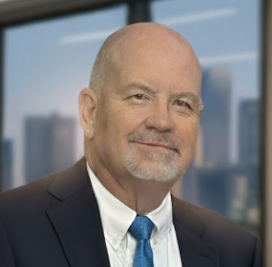
By Scott Shields – Contributing Writer – Capitol Times Media - From Conversations and Material of Zhu Weisha. Learn more about Zhu Weisha here at Capitol Times Media's July Magazine Issue
A Testable Baseline for the Warsh Fed’s Reaction Function
Baseline Date: September 1, 2026
If Kevin Warsh’s Jackson Hole speech, “In Our Time,” is read merely as a hawkish signal, its most important dimension is missed.
“In Our Time” places financial innovation, artificial intelligence, productivity, data, money, and policy tools in a common historical setting. It does not mean that Warsh has already completed a new institutional framework. It does suggest that he is trying to adjust how the Federal Reserve observes the economy, forms judgments, and communicates decisions. If that reading is right, we should be able to use his public arguments, institutional position, actions already taken, and objective constraints to infer how he is more likely to respond as conditions change—rather than explaining each decision after the fact.
This article has two distinct objects of evaluation. The first is Warsh: what he has said and done, and whether the approach ultimately works. The second is our own model: whether, before events occur, we can describe his reaction function with reasonable accuracy. The two should not be conflated. Even if we anticipate a particular action correctly, that would show only that the model had explanatory value at that point in time; it would not show that we understand more than people who have spent decades operating inside capital markets and policy institutions.
By a “verifiable” approach, I mean only three practical requirements: the underlying facts should be checkable; the decision process should be reconstructable; and judgments and forecasts should state their grounds so that later evidence can test them. Throughout, I distinguish between what Warsh has said, what he has done, what I infer, and what he has not addressed. The last category is left open rather than filled in for him.
1. The Object of Prediction Is Not the Next Rate Decision
Whether the Fed hikes in September depends on information that will continue to change before the meeting: employment, inflation, oil prices, war, financial conditions, and other forces that alter the growth and price environment. Simply declaring today that “the Fed will hike in September” is still a point forecast.
The more useful object is Warsh’s reaction function: which facts would lead him to act; which changes in the information set would lead him to revise his judgment; and which longer-run principles are likely to remain stable despite short-term market fluctuations.
We must also separate what Warsh may want to do from what the Federal Reserve can do. The FOMC is a collective decision-making body, while the White House, Congress, the Treasury, bond markets, and global capital flows all affect the information set confronting policymakers. Warsh is an influential node in that broader system, not the system itself. The constraints are concrete: in July 2026 the FOMC voted 9–3 to leave rates unchanged; Warsh was confirmed by the Senate 54–45; and Jerome Powell remained a Fed governor after stepping down as Chair. The Chair has substantial influence but does not decide policy alone.
2. Forecast One: Less Talking Need Not Mean Less Transparency
Confidence: 80% | Evidence: Warsh’s 2014 Bank of England transparency review + the 2026 call for a “quieter Fed” | Watch: shorter statements and less immediate guidance, alongside stronger ex-post reasoning and historical records | Falsifier: the Fed simply speaks less, discloses less, and records less
Warsh has argued that a quieter Fed, communicating more purposefully, would be better able to achieve its objectives. Markets can easily read that as an argument against transparency. Yet in his 2014 review of the Bank of England’s Monetary Policy Committee, he argued for stronger policy reasoning, accountability, and historical records. The relevant distinction is between more disclosure and more meaningful transparency.
Our testable hypothesis is therefore a shift in the timing of transparency: less signaling before a decision, more concise communication at the decision point, a clearer record of the rationale afterward, and fuller reconstruction over time.
That formulation is ours, not Warsh’s. It counts as a genuine hit only if reduced real-time signaling is accompanied by stronger ex-post reasoning, documentation, or retrospective review.
3. Forecast Two: Forward Guidance Will Weaken Further, and the Dot Plot May Lose Salience Before Any Formal Reform
Confidence: 90% | Evidence: June 2026 FOMC discussion of shorter statements; July communications task force; August speech limiting forward guidance in normal times | Watch: statement length, directional language, and the salience of the dot plot for the
Chair and markets | Falsifier: markets continue to trade mainly on the dot plot and Chair-led advance signaling
This process has already partly begun. The June FOMC minutes showed support for shortening the post-meeting statement and reducing language that implied the future direction of rates. In July, Warsh established a communications task force. In August at Jackson Hole, he again argued that forward guidance should be limited in normal times.
The next step is therefore more likely to be less pre-signaling of the policy path than a new mechanism for telling markets what the next meeting will do. The dot plot need not disappear immediately because it is a collective Committee product. A more plausible sequence is for it to lose centrality first, with formal reform considered later.
That would require markets to relearn something basic: do not merely infer the Chair’s next sentence, evaluate the underlying facts.
4. Forecast Three: Principles Will Matter More Than Mechanical Rules
Confidence: 80% | Evidence: the speech emphasizes uncertainty, model limits, and judgment | Watch: more explanation of indicators and trade-offs, with fewer commitments to a fixed rate path | Falsifier: the Fed adopts a new fixed formula or mechanical reaction rule
One possible response to a retreat from forward guidance would be to replace it with a mechanical rule such as a Taylor rule. I still think that is unlikely. Key variables in the economy change, and our knowledge is not precise enough to justify a fixed formula as a substitute for judgment.
A more likely pattern is to explain what information matters and how trade-offs are being assessed, rather than to promise what the next policy move will be. In our language, rules cannot substitute for facts, but that is our summary, not Warsh’s phrase.
5. Forecast Four: The Fed Will Put More Weight on Real-Time, Multi-Source Information
Confidence: 80% | Evidence: the data-sources task force is already under way | Watch: whether new high-frequency, private-sector, and market-internal data enter formal policy materials | Falsifier: the task force produces only general reports without changing the information structure
Warsh created a dedicated data-sources task force, seeking information that is accurate, relevant, contemporaneous, and actionable. This could become one of the most important, and currently underappreciated, changes of his tenure.
I continue to expect internal Fed analysis to become less like “GDP + CPI + unemployment + one model” and more like an information set built from relatively independent sources with different frequencies and leading properties that can be checked against one another. Whether AI will be used for screening and anomaly detection should be left to the task force’s actual output; for now it belongs only on the watch list.
That shift could also reduce the authority of any single model. The point is not to stop using models, but to test them against markets, firms, real-time data, and historical analogues. Agreement across sources does not prove that a conclusion is true; disagreement across sources can reveal where the uncertainty or model error lies.
6. Forecast Five: AI Productivity Will Become a Monetary-Policy Variable
Confidence: 85% | Evidence: the productivity-and-jobs task force explicitly studies AI and other general-purpose technologies | Watch: whether AI enters assessments of potential output, labor, capital formation, and productivity | Falsifier: AI remains a speech theme but does not enter formal analysis
Warsh has already placed AI inside the productivity question rather than treating it merely as technology news. That matters. A conventional framework can too easily equate fast growth with overheating demand. But if AI raises productive capacity and productivity, faster growth need not automatically imply higher inflation.
The real test is whether policy begins to distinguish more clearly between a demand shock and an improvement in supply. If growth is strong and productivity evidence is also strong, Warsh may be less willing to treat high growth itself as sufficient grounds for a rate hike. Conversely, if AI capital spending first pushes up demand for energy, chips, labor, and financing while productivity gains arrive more slowly, the policy response could be tighter.
There are also important variables that this speech did not develop: how asset-price appreciation transmits into inflation; how the Trump administration’s fiscal, energy, trade, and regulatory policies alter price pressures; and how global developments feed through the dollar and U.S. financial conditions. These are worth watching, but they should not yet be written into Warsh’s framework for him.
7. Forecast Six: Short-Term Rates Regain Primacy, While QE and Balance-Sheet Policy Narrow
Confidence: 85% | Evidence: Warsh has emphasized short-term rates as the principal normal-times tool and unconventional policy for genuine crises; a balance-sheet task force is under way | Watch: the frequency of QE, the MBS/Treasury mix, and reserve- regime reform | Falsifier: outside a systemic crisis, the balance sheet remains a frequent normal-times demand-management tool Warsh’s fifth principle is clear: short-term interest rates should be the primary tool for achieving the dual mandate, while unconventional policies are appropriate for genuine crises and should be used sparingly in normal times.
I therefore still favor one broad direction: a smaller normal-times role for QE, along with a re-examination of balance-sheet size, asset composition, duration exposure, and the reserve regime. But claims about how much smaller the balance sheet will become, or when MBS will disappear, should not be stated too rigidly because they depend on FOMC consensus and financial stability.
8. Forecast Seven: “Money Matters” May Become a More Explicit Analytical Framework
Confidence: 60% | Evidence: this is a longstanding Warsh theme, but its degree of institutionalization is unclear | Watch: whether bank and nonbank credit, money quantities, velocity, and financial conditions are linked more systematically | Falsifier: the result is merely a return to M2 as a stand-alone indicator
“Money matters” is one of the themes I most want to watch. Warsh is concerned not only with central-bank money, but also with bank money and credit creation across the broader financial system. The important question is not a single M2 number, but how money, credit, and financial conditions transmit through the economy.
If this theme becomes institutionalized, the Fed may more systematically connect central-bank money, bank credit, nonbank credit, the price and quantity of credit, velocity, asset prices, and financial conditions. For now, however, that remains an inference.
This is also where theoretical projection is most dangerous. Our own research goes further by asking how verifiability relates to the source of credit. Warsh’s public discussion remains centered on money, credit transmission, and central-bank credibility. The two can be compared, but they should not be treated as the same theory.
9. The Largest Non-Consensus Forecast: From Predictive Transparency to Ex-Post Verifiability
Confidence: 55% | Evidence: Warsh’s 2014 emphasis on process records provides historical support, but there is no direct institutional evidence yet in 2026 | Watch: stronger records of reasons, alternative explanations, risk trade-offs, and retrospective
review | Falsifier: communication becomes shorter without a richer ex-post basis for decisions
If I could preserve only one forecast for future testing, it would be this: Warsh may not be trying to make the Fed less transparent. He may instead be shifting the emphasis from telling markets in advance what the Fed is likely to do toward making it easier, after the fact, to understand why a decision was made.
The first can be called predictive transparency; the second, ex-post verifiability. A genuine hit requires institutional evidence: clearer reasons for decisions, more traceable disagreements and alternative explanations, and more systematic retrospective review. If all we see is less talking, then it is simply less talking, not a new transparency regime.
10. September as the First Test: Separate the Scenario Call from the Reaction Function
Scenario judgment (separate from the institutional forecasts above): As of September 1, 2026, I lean toward no rate hike in September. This view is based on the information available as of the baseline date and has explicit failure conditions. If tensions with Iran ease, energy prices continue to fall, and employment continues to weaken, the case for a hike weakens. If energy prices surge again and the shock spreads into underlying inflation, wages, and inflation expectations, the judgment must be reassessed.
The market’s post-speech increase in the probability of a rate hike is an important fact and reflects the collective judgment of sophisticated market participants about Warsh’s reaction function. But market pricing is not the same thing as a policy commitment, especially when Warsh is explicitly warning about forward guidance and the hall-of-mirrors problem.
The distinction is fundamental: forecasting from facts is not the same as forecasting from Fed communication. Markets often infer the next hike or cut from a Chair’s sentence, while the Fed in turn observes the market response to its own communication. The two sides can end up partly forecasting each other. At a minimum, Warsh’s effort to limit forward guidance and emphasize real-world signals is an attempt to move attention away from “guess the Fed” and back toward “evaluate the facts.”
A higher PCE reading therefore does not mechanically imply that the next move must be a rate hike. First ask why PCE is high: energy, housing, wages, services, tariffs, or aggregate demand? Is the increase temporary or persistent? Will it generate second-round effects? Is the policy rate the appropriate instrument for the underlying problem? A forecast has a defensible basis only after those facts and transmission channels are examined.
There are therefore two separate things to test in September. First, does our no-hike scenario remain supported by incoming information, and do any of its stated failure conditions trigger? Second, does Warsh behave consistently with the method he has publicly described, reassessing as facts change rather than mechanically following expectations created by his own communication? Getting the first call wrong would not automatically invalidate the second analysis. They should be recorded separately.
11. A Baseline Sequence, Not a Timetable
If the analysis above is broadly right, Warsh’s tenure may unfold in four layers: first, reduce noise and pre-signaled policy paths; second, rebuild the information system so that new data, AI productivity, and market signals enter judgment more formally; third, reassess the balance sheet, reserve regime, and unconventional tools; and only later, perhaps, move toward deeper accountability and ex-post review. This is not Warsh’s timetable. It is a sequencing hypothesis. If an earlier layer does not appear, the probability of later layers should fall.
The value of this sequence is not in forecasting dates. It tells us what to watch first and what to watch next, so that a single day’s headline does not drive the entire analysis.
12. A Baseline for Ongoing Verification
Going forward, only information that changes the policy information set, the FOMC voting structure, policy-tool constraints, or the probability of a specific forecast should enter the main record. Repetitive news should not. Six domains should be monitored: Warsh and the FOMC; the Treasury and Scott Bessent; White House fiscal, trade, energy, and regulatory policy; markets such as Treasuries, the dollar, and credit spreads; the real economy, including inflation, employment, wages, and productivity; and global institutions and major-economy policy, including the G20, BIS, and IMF.
The record can be simple: new information | primary source | fact/judgment/inference | forecast affected | confidence up/down/unchanged | whether a falsifier has been triggered.
Beginning August 31, 2026, this article is preserved as a baseline. One correct prediction proves little. If Warsh’s repeated sequence of actions over time broadly matches the reaction function described here, then we can say that the model captured part of the pattern. The first thing being tested, however, is always our model.
Primary Sources for Verification
1. Federal Reserve, Kevin Warsh, “In Our Time,” Jackson Hole, August 28, 2026.
2. Federal Reserve, “Chairman’s Task Forces for Advancing Monetary Policy,” July 9, 2026.
3. Federal Reserve, Minutes of the FOMC, June and July 2026.
4. Bank of England, Kevin Warsh, “Transparency and the Bank of England’s Monetary Policy Committee,” 2014.
5. Reuters reporting on market pricing after Warsh’s speech and on differences between Bessent and Warsh regarding long-term rates and market intervention.


